

The pace of development of online shopping is constantly increasing. The classical methods of SEO are not enough for customers to find products anymore. Modern AI-based search and shopping assistants, such as Google AI Overviews, ChatGPT, Perplexity, and many others, are revolutionizing the process of searching for products online.
While a search used to display just a set of blue links, nowadays AI makes recommendations about particular products and combines data from multiple websites. Therefore, in order to get the chance to be selected by AI systems, you need to create a product page that would provide AI systems with all the necessary information.
Generative Engine Optimization (GEO) is precisely what you need.
If you have an online store and want to make it visible for more buyers and generate more sales then it might be helpful for you to learn how the algorithms of AI shopping assistants work.
In this guide, we will discuss what AI shopping engines look for while evaluating product pages.
What is GEO for E-commerce?
The phrase Generative Engine Optimization (GEO) is understood as a process whereby the website and product page is optimized in such a way that the AI-driven search engine can recognize and trust your product.
Unlike SEO that is mainly concerned with optimizing sites for ranking keywords, GEO is about giving the AI the right information so that it trusts the site.
When people are looking for something such as:
* “What is the best gaming laptop under $1,000?”
* “What are the best running shoes for beginners?”
* “What wireless keyboards would you recommend for working from the office?”
The AI-driven engine scans through several websites for suggestions. When your product page provides the right information and seems the most trustworthy,
it will be chosen.
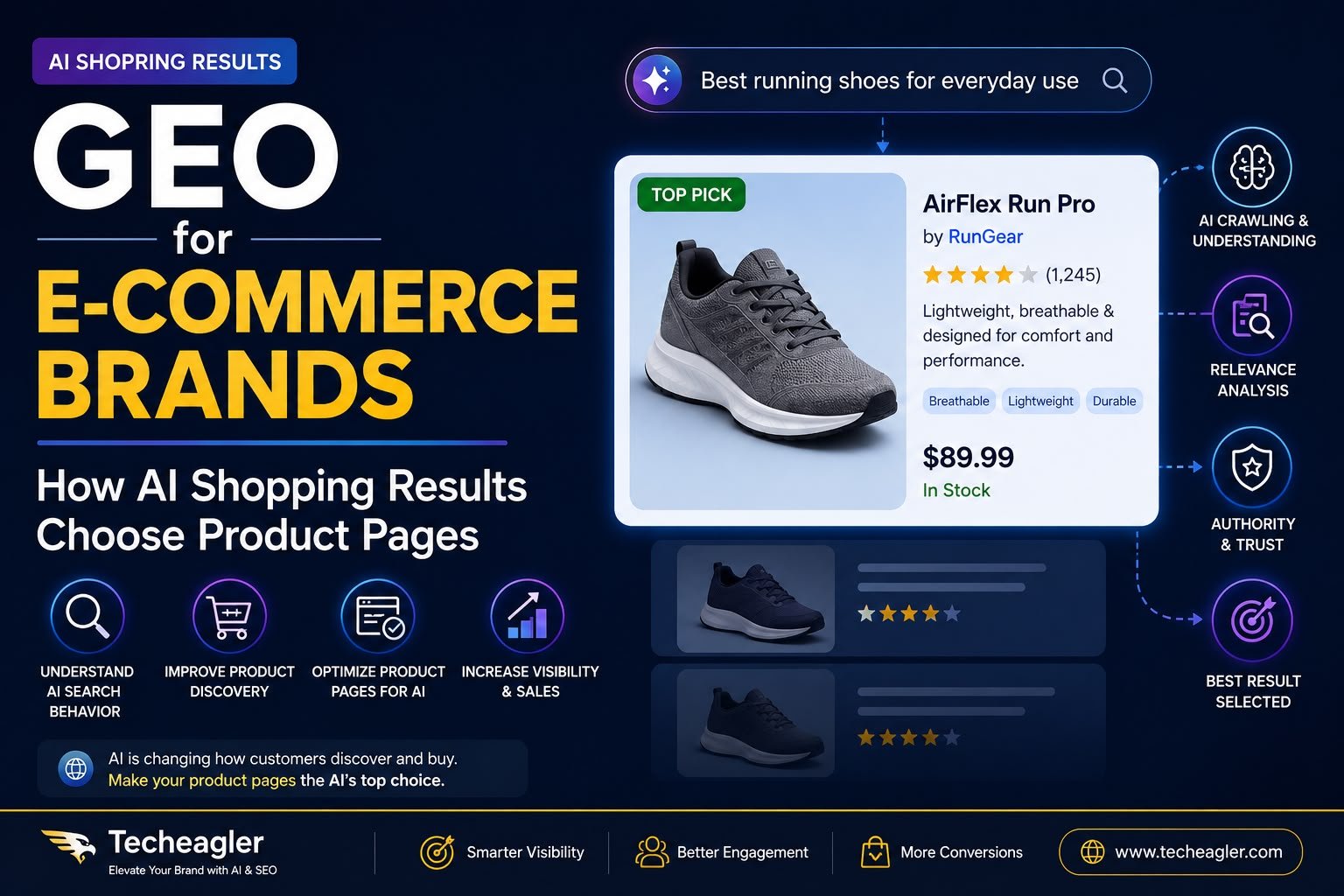
How AI Shopping Results Choose Product Pages
AI doesn’t randomly recommend products. It evaluates several important quality signals before including a product in shopping recommendations.
Complete Product Information
AI prefers pages with detailed product descriptions.
Instead of writing only a few lines, include:
* Product overview
* Key features
* Benefits
* Technical specifications
* Dimensions
* Materials
* Compatibility
* Warranty details
* What’s included in the box
The more useful information you provide, the easier it is for AI to understand your product.
Clear Product Titles
Product titles should be descriptive rather than stuffed with keywords.
Good example:
Sony WH-1000XM5 Wireless Noise-Canceling Headphones
Poor example:
Cheap Wireless Headphones Best Headphones Buy Online
A clear title helps both users and AI understand exactly what you’re selling.
High-Quality Images
AI shopping systems value product pages that include:
* Multiple product images
* Different viewing angles
* Lifestyle photos
* Zoomable images
* Clean backgrounds
* High resolution
Images improve customer confidence while also helping AI identify product details.
Structured Data (Schema Markup)
Schema markup is one of the strongest GEO signals.
Using Product Schema helps AI understand:
* Product name
* Price
* Currency
* Availability
* Brand
* SKU
* Reviews
* Ratings
Without structured data, AI may struggle to interpret important product information correctly.
Honest Customer Reviews
AI values real customer experiences.
Encourage verified buyers to leave reviews that describe:
* Product quality
* Performance
* Durability
* Comfort
* Ease of use
Detailed reviews provide additional context that AI often references when evaluating products.
Transparent Pricing
Clearly display:
* Current price
* Discounts
* Sale price
* Shipping costs
* Return policyg
Hidden pricing or confusing checkout processes reduce trust.
Fast Website Performance
Page speed matters.
Slow-loading product pages create a poor user experience and can reduce your chances of appearing in AI shopping recommendations.
Optimize:
* Image size
* Core Web Vitals
* Mobile responsiveness
* Server speed
* Lazy loading
A fast website benefits both SEO and GEO.
Strong Brand Trust
AI systems favor brands with a positive online reputation.
Build trust through:
* Customer testimonials
* Secure checkout
* Clear contact information
* About Us page
* Privacy policy
* Shipping policy
* Return policy
These trust signals help AI determine whether your business is reliable.
How to Optimize Product Pages for AI Shopping
To improve your visibility in AI-generated shopping results, follow these best practices:
Write Human-Friendly Product Descriptions
Avoid copying manufacturer descriptions.
* Who the product is for
* Why it’s useful
* Common use cases
* Key advantages
* Real-world benefits
Helpful content is more likely to be referenced by AI.
Answer Customer Questions
Include a FAQ section answering common questions such as:
* Is this product waterproof?
* What sizes are available?
* Does it include a warranty?
* Is international shipping available?
* How long does delivery take?
AI frequently extracts answers from FAQ content.
Add Comparison Content
Comparison tables help AI understand differences between products.
* Product A vs Product B
* Standard vs Premium version
* Latest model vs Previous generation
Comparison content also helps customers make faster buying decisions.
Use Original Content
Avoid duplicate product descriptions across your store.
Original content increases trust and helps your pages stand out from competitors.
AI prefers current information.
* Prices
* Stock availability
* Product specifications
* Images
* Features
* Promotions
Fresh content signals that your website is actively maintained.
Common SEO Mistakes E-Commerce Brands Should Avoid
Many online stores unknowingly reduce their chances of appearing in AI shopping results by making avoidable mistakes.
Common issues include:
* Thin product descriptions
* Missing schema markup
* Low-quality images
* Outdated pricing
* Duplicate manufacturer content
* No customer reviews
* Slow-loading pages
* Broken links
* Poor mobile experience
* Missing trust pages
Fixing these issues can significantly improve both SEO performance and AI visibility.
Why does GEO Matter for the Future of E-commerce?
AI-assisted shopping experiences are getting more advanced.
Customers no longer need to visit multiple sites to get the most relevant products.
Companies that focus solely on optimizing their sites in accordance with search engine rankings might become invisible when AI-assisted shopping becomes more prominent.
By investing in GEO now, you make sure that you will be ready for whatever the future of search will bring.
Final Thoughts
It is not enough for your business to rank in Google; the future of e-commerce depends on becoming the product AI wants to suggest.
With Generative Engine Optimization, you can fill the gap between SEO and AI search algorithms by optimizing the informational value and credibility of your products as well as making them easily readable for machines.
Your main objectives include writing informative product descriptions, adding structured data, optimizing page load time, showing user reviews, and providing accurate product data. The use of such optimization techniques will help you become more visible in AI shopping search results and provide a better customer experience.
In light of the above, businesses that understand the importance of Generative Engine Optimization and start implementing it now will find themselves in a better position in the future.